
Funnel Automation in Email Marketing 2026: Why it Beats Random Emails
Founders often overlook email marketing, even though funnel automation is one of the most effective growth assets when built correctly.
Writing a good email isn’t just about the words on the screen. It’s about what happens after someone opens it.
Many teams focus on subject lines and copy, but once the email is sent, there’s no structure guiding the next step. The result is a stream of random newsletters and generic blasts that don’t move decisions forward.
That approach doesn’t work anymore.
Behavior-based automation does. In fact, companies using triggered email sequences generate 37% of their email revenue from just 2% of their sends.
In this post, we’ll break down how to build an email system that nurtures leads, supports sales, and converts customers without constant manual effort.
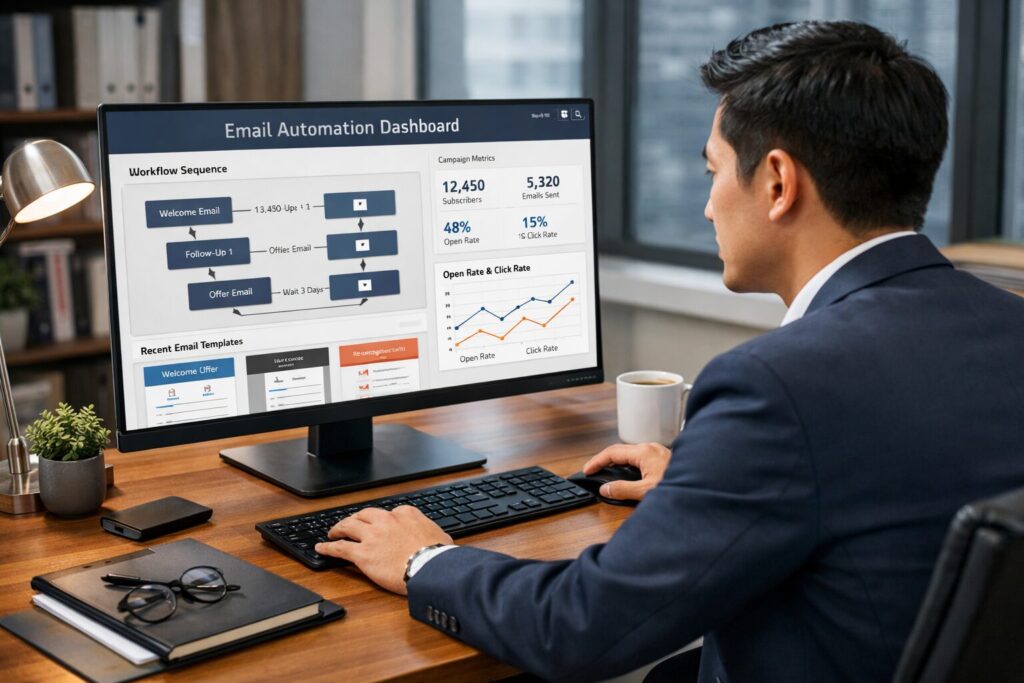
What Full-Funnel Automation Actually Means for Email
Full-funnel automation sends emails based on where someone is in your customer journey, not your calendar.
New subscriber? Send a welcome sequence. Abandoned cart? Send a recovery email within an hour. Silent for 90 days? Send a reactivation offer.
Every action triggers the right response at the right time.
Traditional email marketing sends the same message to everyone on Tuesdays. Full-funnel automation sends different messages to different people based on what they did.
The numbers prove this works. Automated emails get 40–48% open rates, compared to 25% for broadcasts. Click rates run 3–4 times higher. One in three people who click an automated email buy something, compared to one in 18 for newsletters.
Automated emails convert 2,300% better than batch-and-blast sends.
Understanding what micro conversions are and how to track them helps you identify which user actions should trigger automated sequences.
How Small Teams Scale with Email Funnel Automation
Email automation multiplies what small teams can accomplish.
You don’t need a massive sales staff when automated workflows nurture leads, follow up on abandoned carts, and reactivate dormant customers.
The stats back this: 75% of businesses now use marketing automation. 70% of marketing leaders plan to increase investment in 2026.
Email consistently outranks social media and paid ads for effectiveness. Small businesses using email automation average $68 in revenue per $1 spent, nearly double the typical ROI.
Build a Funnel Automation System (not individual emails)
Think in systems, not individual emails.
Your CRM remembers every customer birthday, follows up with every lead, and sends timely reminders for every abandoned cart. You don’t manually track these things. Your system does.
Modern email tools (Mailchimp, Klaviyo, HubSpot) offer drag-and-drop automation builders. A bit of upfront setup creates a predictable growth engine.
One caveat: don’t pick tools without strategy first. Choosing software before mapping your customer journey wastes resources. Focus on strategy and content. Tools support that, not substitute for it.
If you’re questioning whether you need a website in 2026, consider this: email automation requires a solid digital foundation. Your website generates leads that are then integrated into email sequences, which help convert them.

Behavior-Based Funnel Automation Sequences That Drive Revenue
Relevance wins. Behavior-based emails target the right moment with the right message.
Here are high-ROI automation sequences every business needs:
Lead Magnet Delivery and Nurture
Someone downloads your guide. Your system immediately sends a welcome email delivering that content.
Welcome emails get 50%+ open rates, the highest of any campaign type.
Follow with a nurture series over the next week: tips, case studies, and the founder’s story. These emails land when interest peaks, making them far more effective than generic newsletters sent later.
Onboarding Sequences
New customer signs up. Send a series: Day 1 welcome, Day 3 getting started guide, and Day 7 pro tips.
Add behavior triggers: “If the user hasn’t completed setup within 5 days, send a reminder.”
This drives activation and reduces churn. Both directly impact revenue.
Sales Nurture Drips
Not all leads buy immediately. Set up nurture campaigns for high-intent prospects who didn’t convert.
Visited your pricing page but didn’t sign up? Enroll them in a sequence addressing objections, sharing testimonials, and offering ROI calculators.
These keep you top-of-mind until leads are ready to buy.
Understanding the psychological triggers that influence buying decisions helps you craft nurture sequences that actually convert.
Cart Abandonment Emails
70% of carts get abandoned. Automated recovery emails win back significant revenue.
Send the first reminder within an hour while intent is fresh. About half of people who click abandoned cart emails complete their purchase.
This sequence alone can recover thousands in otherwise lost revenue.
Reactivation Campaigns
Subscribers go cold after months of no engagement. Set automation to identify inactive contacts and send re-engagement emails.
“We miss you; here’s 50% off” or “Do you still want to hear from us?”
This keeps your list healthy and wins back lapsed customers. Clean lists improve deliverability. Even a small drop in inbox placement can wipe out a month’s revenue gains.
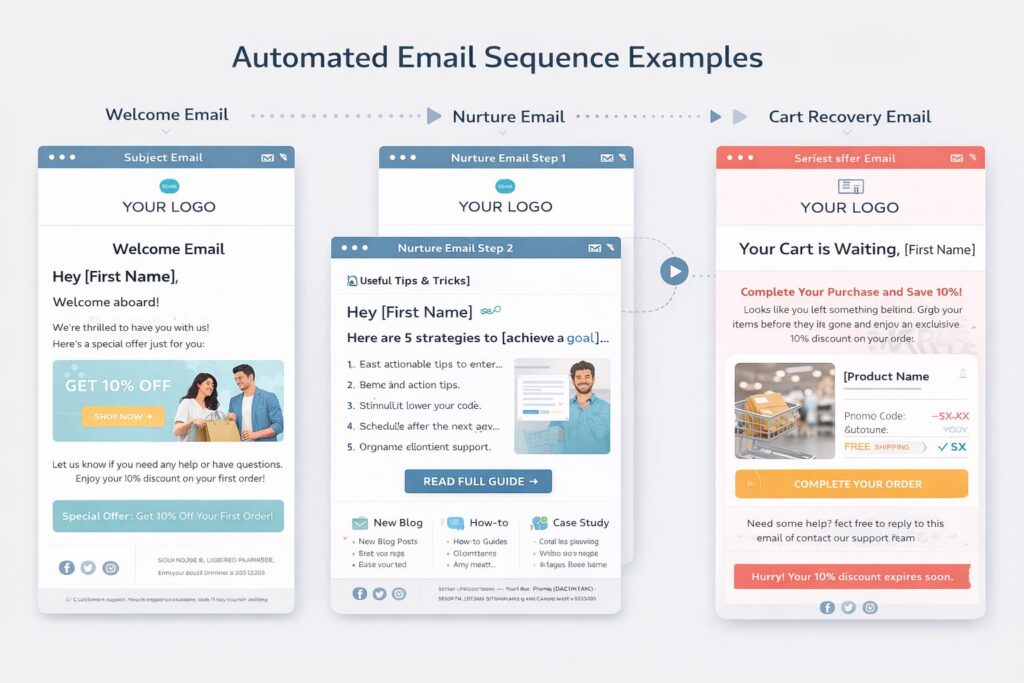
Behind all these examples is data: tracking what pages people visit, what they click, what they purchase. Your email platform or CRM triggers the appropriate response automatically.
Integration between your email system and website analytics makes this possible. Link your CRM to your email platform. Connect analytics to your dashboard. Sync customer data across systems.
Automated emails had 52% higher open rates and 337% higher click rates than scheduled ones because they reach people when content is most relevant.
Before building these sequences, ensure your landing pages include these 7 essentials. Email drives traffic. Your pages convert it.
Final Thoughts
Email marketing in 2026 isn’t about sending more emails. It’s about sending smarter emails.
Build a funnel automation system that maps to your customer journey. Automate repetitive touches. Trigger relevant messages based on behavior. Segment your audience. Personalize content.
Sustainable success comes from treating email as a strategic asset, not a weekly task.
The businesses winning with email integrate it with their CRM and sales process. They automate lifecycle touches. They optimize based on data, not guesses.
Tools and tactics matter less than systems thinking. Map how leads warm up over multiple emails. Plan customer onboarding sequences. Ensure every important action triggers relevant follow-up.
Send value at the moment customers need it. Leverage technology to personalize at scale. Done right, customers don’t feel like part of a funnel. They feel understood.
Your email system either drives growth or wastes time. The difference shows up in open rates, click rates, and revenue per send.
Fix your foundation before chasing tactics. Otherwise email stays broken.
When you’re ready to build conversion-focused systems, understand the website conversion blueprint and which pages drive 80% of results. Email and websites work together to turn visitors into customers.
Ready to turn email into your growth engine?
