
In 2026, being better isn't enough. You need a revenue system that gets you chosen.
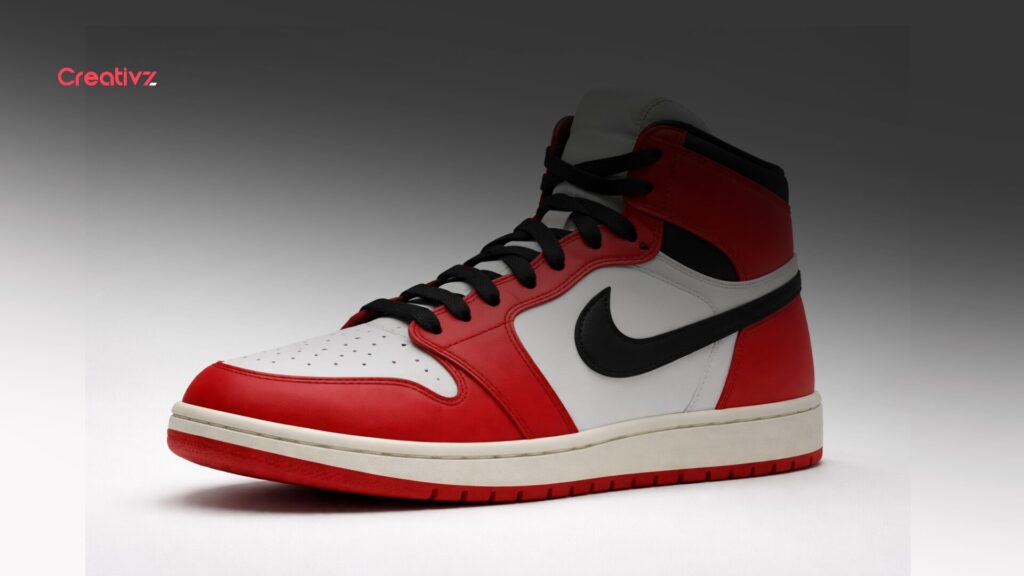
In 1984, Adidas passed on Michael Jordan.
Adidas did not pass on Jordan because of a lack of talent; he had plenty. The deal was available. Nike secured it for $2.5 million plus royalties. Adidas said no because its process deemed Jordan the wrong fit. He was considered too short. Their focus was on centers.
Nike, by contrast, built their system around Jordan. Air Jordan debuted in 1985. That year alone, Nike saw more than $70 million in orders.
This blog breaks down the six components of a revenue system that moves you to the top of the shortlist, before, during, and after buyers evaluate their options.
Why the Nike-Jordan Story Is a Revenue System Lesson
In 1984, buyers still responded to mass advertising, shelf placement, and decades of brand reputation. A better product plus better distribution usually wins. The feedback loop was slow. Mistakes took years to surface.
In 2026, feedback is instant due to advancements in AI. Buyers now use AI tools to research and review options before a sales rep even knows there is a chance. People check trust signals across different channels in seconds, often aided by AI-generated summaries. If your system is hard to find when buyers use AI tools to decide, you will not be considered, no matter how good your product is.
Being better still matters. But today, being chosen means having a system that moves you to the top of the list before, during, and after buyers evaluate their options.
Why Strong Businesses Still Lose: The Gap Between Product and Revenue System
Most founders do not want to hear this part.
You might have a strong product, a clear differentiator, and a results-driven team. Still, it’s possible to lose out to competitors who are simply easier to find, trust, and reach.
Here’s why that happens:
Discovery is no longer just about search rankings.
Gartner forecasted in 2024 that traditional search engine volume would drop by 25% by 2026, largely due to AI chatbots and virtual agents that aggregate and evaluate options before a human intervenes. Google responded by rolling out AI Overviews to over a billion users, reshaping how information and choices are presented. Ahrefs then ran a 300,000-keyword study in early 2026 and found that when AI Overviews surface in results, the top-ranking page sees a 58% drop in average click-through rate.
With less traffic, every visit is higher-stakes. Many companies, though, haven’t kept their conversion systems up to date.
Buyers are doing more research without you.
Gartner’s March 2026 buyer survey found that 67% of B2B buyers now prefer a rep-free experience, enabled in part by AI-powered research tools. 45% used AI tools during a recent purchase. 73% actively avoid suppliers who send irrelevant outreach, which may be flagged by AI filtering. And 69% report inconsistencies between what a company’s website says and what its sales team says, which AI tools can quickly detect.
Now, buyers arrive better informed and later in the decision process, expecting consistency at every step. If your sales funnel isn’t built for these conditions, you quietly lose deals you deserve to win.

Trust is no longer a soft metric.
Forrester’s 2026 B2B predictions identified a marked increase in buyer confidence issues related to inaccurate AI-generated information. Specifically, 19% of buyers using generative AI expressed diminished confidence due to unreliable data, a risk that comes with greater AI involvement in information gathering. Concurrently, Forrester observed that 75% of enterprise B2B firms are increasing their influencer relations budgets, acknowledging that outside validation is becoming crucial as AI-generated insights can be inconsistent.
So, trust has evolved. It’s not just about reputation anymore; it’s about proof, consistency, and trusted third-party signals checked before decisions get made.
The Real Shift: How AI Search Made Your Revenue System the Deciding Factor
This evolution—driven by AI systems that aggregate, evaluate, and filter information—is at the core of the new buying environment.
A decade ago, product quality, price, and strong sales relationships mostly drove decisions.
According to Gartner, while buyers now interact with more digital touchpoints and often use AI tools to research and compare their options before engaging with companies, by 2030, 75% of B2B buyers are expected to prefer sales experiences that emphasize human interaction rather than relying solely on AI, underscoring that current AI-led journeys still require a human element at decision time.
The companies that win are not always the best. They are the ones with the clearest message, the fastest response, the most reliable proof, and the simplest path from interest to decision.
How the B2B Buyer Journey Has Changed
| Discovery | Search click browse | AI Overviews scaled broadly; traditional search volume declining (Gartner, 2024) | AI-visible topic coverage + brand mention strategy |
|---|---|---|---|
| Evaluation | Sales-led early discovery | Majority preference for rep-free; buyers avoid irrelevant outreach (Gartner, 2026) | Decision-support pages that qualify and prove value |
| Trust | Brand + features | Trust now competes with price and quality; buyers seek external validation (Edelman) | Proof systems: customer evidence, analyst credibility |
| Conversion | More traffic solves pipeline | CTR drops 58% when AI Overviews appear; leads arrive later and more informed (Ahrefs, 2026) | Higher conversion rates, faster routing, better follow-up |
| Buying Motion | Rep-driven negotiation | Agent-led quote negotiation; AI used in purchase workflows (Forrester, 2025) | Modular collateral, consistent claims, flexible pricing logic |
| Measurement | Last-click attribution | [AI influences decisions before click; platforms emphasize visibility](https://ir.similarweb.com/news-events/press-releases/detail/138/ai-discovery-surges-similarwebs-2025-generative-ai-report-says?) (Similarweb, 2025) | Revenue visibility linking mention to pipeline outcomes |
What a Revenue System That Gets You Chosen Actually Includes
A genuine growth system does more than update your website or CRM. It connects each step, from first impression to closed deal, making everything clear and easy for the buyer.
1. Positioning and Value Clarity
Your message should quickly answer three questions: who you help, what problem you solve, and why your way works. If buyers have to guess, they will move on.
According to a March 2026 Gartner report, nearly half of B2B buyers have already used AI in their purchasing process, underscoring the need for clear, consistent value messaging across digital channels to foster trust.
- Create one shared value sheet that sales and marketing both use.
- Add a qualification box: who you’re for, and who you’re not.
2. AI-Visible Content and Offsite Credibility
If AI tools cannot find you, mention you, or explain your point of view, you are invisible to buyers as they make their shortlists.
- Publish one definitive page per core use case, with clear definitions, data, and outcomes.
- Build 2-4 credible media placements per quarter in relevant publications.
- Audit your robots.txt to confirm you are not accidentally blocking AI search crawlers.
3. Decision-Support Pages That Replace Early Sales Calls
Your website should handle what a sales rep used to cover in the first two meetings. This includes qualifying leads, comparing options, providing proof, handling objections, and giving a clear next step.
As AI Overviews affect initial website visits and shift user behavior, it is especially important to ensure your pages meet the needs of visitors who are further along in their decision-making and seeking more personalized engagement. This means your landing pages should go beyond generic content and give users the relevant information and meaningful contact options they expect.
- Add a ‘Who it’s for / Who it’s not for’ section to the top landing pages.
- Build one comparison page: your brand versus the status quo.
- Add quantified results above the fold, with named outcomes and risk reducers.

4. CRM and Lead Routing
Speed and accuracy are more important than volume. Gartner’s data is clear: sending irrelevant messages does not just fail, it pushes buyers away. In fact, 73% avoid suppliers who do this.
Your routing system needs to match the right lead to the right next step, fast. That means ICP-based routing rules, enriched lead records, and SLAs that distinguish high-intent from low-intent signals.
- Set routing rules by ICP tier and intent level
- Define a minimum viable lead record: source, channel, use case, company size, and role.
- Set a response SLA: minutes for high-intent leads, hours for low-intent
5. Follow-Up Automation That Handles Late-Stage Buyers
HubSpot’s 2026 State of Marketing data shows that about [70% of marketers say leads now arrive later in the buying process after doing more AI-assisted research](https://www.hubspot.com/state-of-marketing?). This means your follow-up system must stay relevant for a longer period.
Generic sequences don’t do that. Branched sequences based on use case, with automated proof sends and reactivation loops, do.
- Create 3 follow-up tracks branched by use case.
- Automate a proof package immediately after demo scheduling.
- Add a re-open loop at 30, 60, and 90 days for ‘no decision’ opportunities.
6. Revenue Visibility That Matches the New Journey
Most founders track the wrong metrics. Traffic, impressions, and last-click conversions do not reveal where deals are getting stuck or why buyers pick someone else.
You need to see the whole system—from the first AI mention to pipeline entry to closing the deal. Google’s Search Central says AI feature traffic shows up in Search Console. Similarweb has shown that AI referrals can now be tracked. Make use of that data.
- Standardize pipeline lifecycle definitions and enforce them in your CRM
- Track AI referral URLs and UTM tags where platforms provide them
- Run a monthly system review: identify top leakage points and ship one fix per month.
System Components: KPIs, Diagnostics, and Quick Fixes
| Positioning / Value Clarity | ICP-qualified conversion, demo-to-win, message recall | Can a buyer say why you win in one sentence? | Rewrite hero + value sheet + qualification box |
|---|---|---|---|
| AI-Visible Content | AI mention/citation share, branded search lift | Do AI answers name you for your category use cases? | Publish one definitive use-case page + comparisons |
| Decision-Support Pages | Page conversion rate, assisted pipeline, sales cycle length | Do your pages replace early sales calls? | Add proof above fold + for/not-for section + pricing range |
| CRM / Routing | Speed-to-lead, MQL to SQL conversion, SLA compliance | Do high-intent leads get the right next step fast? | Implement routing rules + minimum lead schema |
| Follow-Up Automation | Contact rate, show rate, reactivation | Do late leads keep moving through the funnel? | Use-case-based sequences + automated proof send |
| Revenue Visibility | Pipeline velocity, CAC payback, segment win rates | Do you know where deals stall and why? | Monthly leakage review + shared dashboard |
The Blind Spots Founders Hit Without a Revenue System
Adidas did not lose Michael Jordan because it lacked resources. They lost him because their evaluation system focused on the wrong things.
A similar pattern still happens in B2B. Founders often focus on product features, design, or thought leadership, thinking that quality alone will attract buyers. But without a system built for visibility and trust, most strong products get overlooked.
Here are the Adidas-style blind spots we see most often:
| Obsessing over product | Launching new features before fixing conversion | Traffic goes to waste; pipeline stalls at awareness |
|---|---|---|
| Assuming traffic = growth | Scaling ad spend without a conversion system in place | CAC rises; ROAS drops; revenue stays flat |
| Neglecting AI visibility | No structured content; blocking AI crawlers unintentionally | Competitors get cited; you get skipped in AI-assisted research |
| Inconsistent messaging | Website says one thing; sales team says another | 73% of buyers avoid suppliers who send irrelevant or inconsistent outreach (Gartner, 2026) |
| No follow-up system | Generic email sequences; no branching by use case | Late-stage leads go cold; deals stall without a re-open loop |
| Last-click measurement | Reporting only on final conversions; ignoring pipeline quality | Wrong bets on channels; leakage goes undetected for months |
The Founders Who Win in 2026 Have a Revenue System. Not Just a Better Product.
Nike did not win because Air Jordan was the best sneaker in 1985. They won because they built a system that made Jordan impossible to ignore, hard to dismiss, and easy to buy.
Look at how other companies have done the same thing:
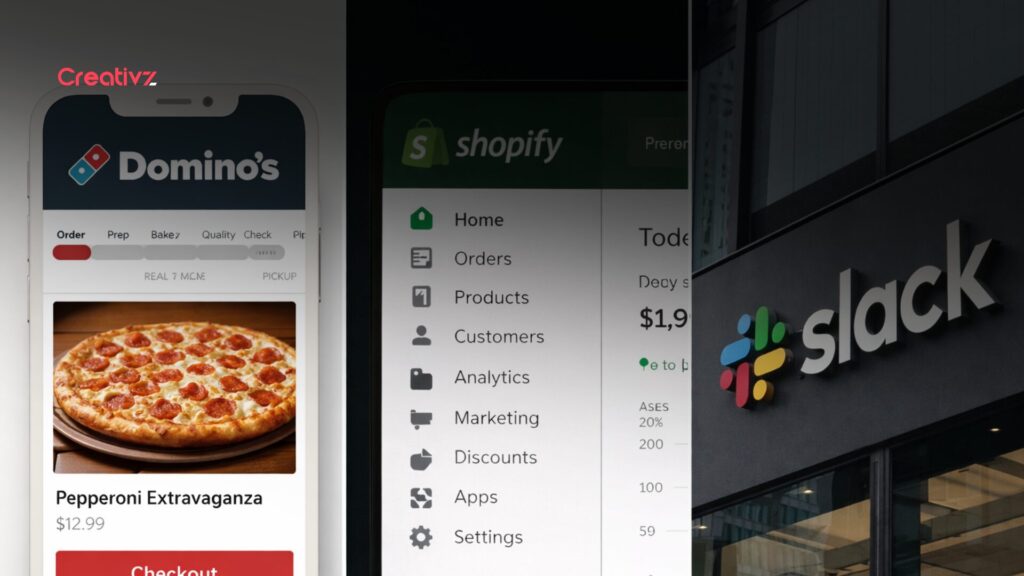
Domino's: digital ordering as a growth moat
In 2024, Domino’s made over 85% of its U.S. retail sales through digital channels. They did not do this by making a better pizza, but by making it faster and easier to order than any competitor. That is the power of a good system.
Shopify: ecosystem as the product
By December 2024, Shopify had more than 16,000 apps in its marketplace. The platform is good, but what keeps merchants loyal is the integrated ecosystem that grows in value as their business grows. Merchants do not pick Shopify because it is the best. They pick it because it is the most connected.
Slack: conversion through system design
Slack’s S-1 filing showed that about 10% of its 2018 revenue came from organizations that switched from a free plan that year. Their conversion system, which included onboarding, integration prompts, and usage thresholds, did the selling. The product only needed to deliver on its promise.
The common factor is not product quality. It has a system that makes the choice clear, easy, and backed by proof.
Want to Go Deeper?
If any of these components are gaps in your current setup, here are three places to start:
- Why Your Landing Page Isn’t Converting and Why Redesigns Don’t Fix It – Most conversion problems aren’t design problems. This post breaks down the real reasons pages underperform and what to fix first.
- How to Build Predictable Revenue with a Revenue Infrastructure Stack – A step-by-step look at the systems layer most B2B businesses are missing, and how to build one that compounds over time.
- What Is Conversion Rate Optimization and Why Most Businesses Get It Wrong– CRO isn’t A/B testing button colors. This covers what it actually means, where most businesses waste their effort, and what moves the needle.
Final Thought
Nike’s first deal with Michael Jordan was for $2.5 million plus royalties. Adidas could have made the same deal. They had the resources and the relationship. But they passed because their system used the wrong criteria to judge the opportunity.
Most founders face the same situation today. The opportunity is clear. The product is ready. But without a revenue system that makes them easy to find, trust, and choose, that opportunity goes unrealized.
The businesses that win in 2026 are not always the best. They are the most visible, the most consistent, and the easiest to say yes to.
If you are not sure where your revenue system has gaps, that is exactly what the Free Digital Growth Audit is for. We go through your current setup, identify where deals are stalling, and show you the specific components worth fixing first.
