
In 2013, Target opened 124 stores across Canada in one wave. The retailer carried a recognized brand, billions in capital, and decades of experience running stores in the United States. Less than two years later, all 133 Canadian locations were closing. Target expected the exit to generate $ 5.4 billion in pre-tax losses. Why Target failed in Canada comes down to one problem: the company scaled faster than its operating systems supported it.
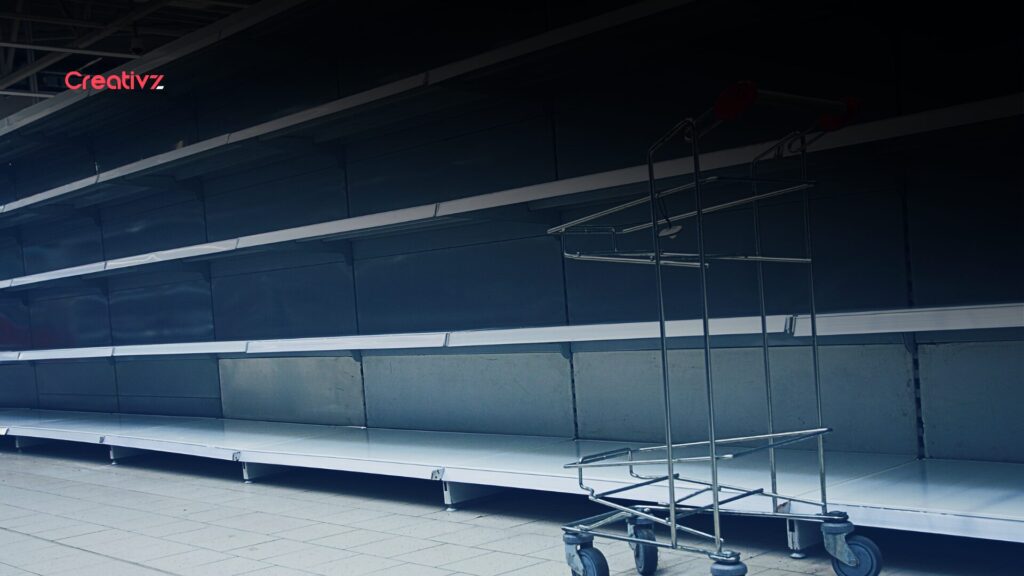
Customers walked into stores and found empty shelves. Distribution centers held inventory that the stores never received. Behind the scenes, inaccurate data, supply chain breakdowns, aggressive pricing decisions, and weak product selection fed into each other. Target did not fail because shoppers rejected the brand. Target failed because growth outpaced the infrastructure meant to support it.
Target reported 124 Canadian stores from its 2013 opening wave. By January 2015, the company announced it would close all 133 locations and take a 5.4 billion pre-tax loss.
Why Target Failed in Canada Starts With an Aggressive Launch
Most retailers open a handful of stores, test the market, and expand region by region. Target skipped this step. The company opened 124 stores in a single year, betting the brand recognition built in the United States would translate directly north of the border.
The bet ignored a basic operating reality. New markets need new logistics networks, new supplier relationships, and new inventory systems built for local conditions. Target imported its plan without rebuilding the foundation underneath it.
What Made the Target Canada Launch Different From a Normal Expansion?
A normal retail expansion adds stores in phases, giving supply chains time to stabilize before adding volume. Target added full-scale volume before its Canadian supply chain and inventory systems were ready to carry it.
The First Warning Signs Inside Target Canada Stores
Shoppers found the clearest evidence first. Shelves sat empty even when products existed somewhere in the network. Some stores held excess inventory in the back room while the sales floor stayed bare, a symptom of a disconnect between what the system reported and what staff found on hand.
Employees flagged the problem early. Reports from the period indicate that staff manually counted inventory because the system data did not match the stock on hand. When frontline teams stop trusting their own tools, the problem stops being operational and becomes structural.
How Data Errors Compounded the Target Canada Failure
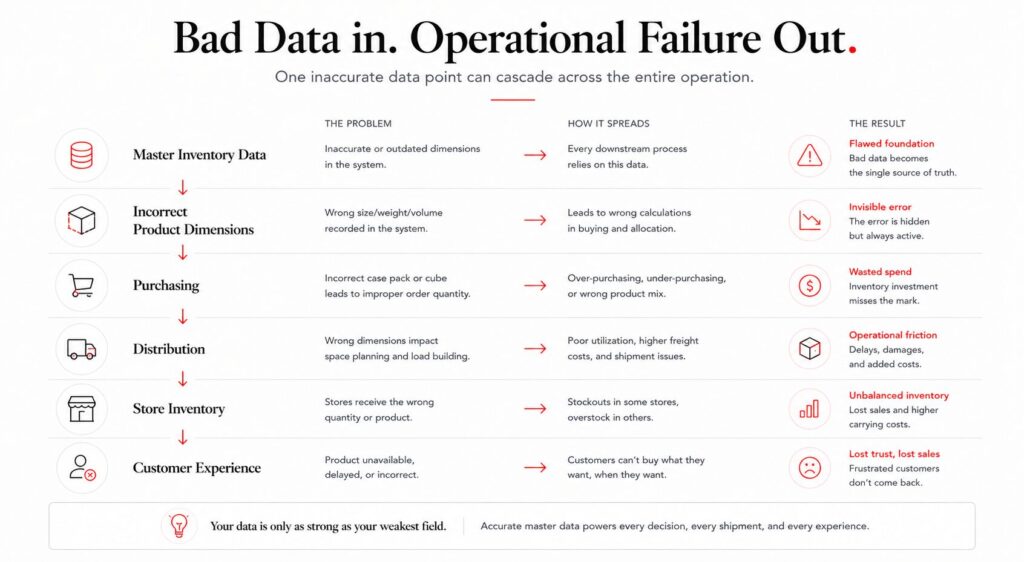
A single data error rarely sinks a company. Compounding errors do. Target Canada’s inventory database held incorrect measurements, wrong product dimensions, and mismatched counts, small errors multiplying across 124 stores and a full distribution network at once.
Every layer built on top of the data inherited the same mistakes. Purchasing decisions used bad numbers. Distribution routing used bad numbers. Store replenishment used bad numbers. No single team was positioned to fix the problem alone, because the flaw sat upstream of every decision they made.
Why Does One Data Error Turn Into a Company-Wide Failure?
A data error becomes a company-wide failure when every downstream system depends on the same source of truth. Purchasing, distribution, and store operations at Target Canada all pulled from the same flawed inventory data, so one mistake traveled through the entire chain instead of staying contained.
The Real Cost of the Target Canada Exit
Target closed all 133 stores and recorded a 5.4 billion dollar pre-tax loss. The company also laid off roughly 17,600 employees across Canada. The financial cost tells only part of the story. The reputational cost, the executive time lost, and the two years of market share ceded to competitors add weight the balance sheet never shows.
The Hidden System Problem Behind Why Target Failed in Canada
Executives at the time pointed to supply chain issues as the surface cause. The deeper problem sat in how the company scaled. Target treated expansion as a marketing and real estate exercise. Store count, square footage, and brand visibility, executives tracked these numbers closely. Operating readiness, they did not track it with the same discipline.
A business is a system before it is a brand. Revenue, inventory, staffing, and customer experience all depend on how well the underlying system holds together at higher volume. Target scaled the visible parts of the business while the operational core stayed unready.
What Is an Operating System Failure in a Growing Business?
An operating system failure happens when a company adds revenue, stores, or customers faster than its internal processes, data, and infrastructure support.
What Growing Companies Should Learn From Target Canada
The founders and executives most at risk of repeating this mistake run businesses between one million and thirty million dollars in revenue. At this stage, growth often outruns the systems built to manage it. A founder signs new clients, opens new markets, or launches new products, and the operations behind the front end stay a step behind.
The lesson from Target Canada applies at any scale. Growth multiplies whatever exists underneath it. Strong systems get stronger under load. Weak systems break faster under the same load.
The Creativz Expansion Readiness Framework
Before adding a new market, a new product line, or a large volume increase, a business should test seven areas.
- Data accuracy: The reporting reflects what exists in inventory, pipeline, or operations, not what the system assumes.
- Fulfillment capacity: The infrastructure handles double the current volume without manual workarounds.
- Process ownership: One person or team owns each critical process, with clear accountability.
- Customer experience: Service quality holds steady once volume increases.
- Reporting visibility: Leadership sees accurate numbers in real time, not after a delay.
- Failure recovery: The business has a defined recovery process for when one part of the system breaks.
- Expansion pace: Growth happens in phases the operating system absorbs, not in one large jump.

What Should Founders Test Before Scaling?
A founder tests a smaller version of the expansion first, in one location or one segment, and measures how current systems hold up under new volume before committing full resources to the larger rollout.
Want to Go Deeper?
Final Thought
Target did not fail in Canada because of one broken process. Target failed because growth moved faster than the systems meant to carry it, and every small crack widened under the added weight. The same pattern shows up in businesses scaling from one million to thirty million dollars in revenue, at a smaller scale, with lower public visibility.
Growth does not create problems. Growth reveals those already inside the business.
Start with a Digital Growth Audit to find where your systems are ready for growth and where they are not. Or take the Revenue System Scorecard for a faster, self-guided look at your current infrastructure.

Creativz.io
Creativz.io is a digital growth consulting firm that builds revenue infrastructure for B2B founders scaling from $500K to $10M ARR. The team architects conversion systems, CRM pipelines, lead-nurture automation, and analytics infrastructure that turn website traffic into predictable revenue. Creativz has worked across construction, SaaS, fintech, B2B services, and logistics, with a focus on systems that scale without scaling headcount.
