
“Should we spend more on LinkedIn?” You open the $18,000 deal your team just won. The source field is blank.
Closed-loop attribution connects recorded marketing activity to sales outcomes in your CRM. If you can’t verify the source, keep the deal in your closed-won total and report its source as Unknown.
In this guide, you’ll learn how to:
- Trace a closed-won deal back to a recorded marketing touchpoint
- Decide when you have enough evidence to credit a campaign
- See how much revenue still has an unknown source before you move budget
What closes the loop between marketing and sales?
The loop closes when a sales outcome makes it back into marketing reporting. Your team can see which recorded touchpoint connects to a deal, how the deal ended, and what it was worth. Workshop Digital’s guide to closed-loop reporting walks through how teams connect those records and send sales outcomes back to marketing.
That process involves two decisions. First, can you connect a marketing interaction to this deal? Second, does your attribution rule give that interaction credit? A demo request from LinkedIn could earn credit in a demo-request report. A first-touch report could credit a different source if you have evidence of an earlier interaction.
If your team is still deciding which touchpoint to credit, our guide to marketing attribution for startups covers the broader choices. For this audit, pick one rule and use it consistently.
Can you trace the $18,000 deal?

Let’s use the $18,00 deal as an example. You open the opportunity and find two contacts. One signed the agreement. The other requested the demo. The deal’s source field is empty, so you look up the original demo submission.
The form record shows a LinkedIn campaign tag, the submission date, and the work email of the contact who requested the demo. That contact is attached to the opportunity, and the request came in before the deal was created. You now have a record linking the campaign, the demo request, and the deal.
If your report credits the campaign recorded on the demo request, you can attribute the $18,000 to that LinkedIn campaign. Save the form record alongside the attribution entry so someone else can follow the same trail.
Now imagine the form record has no campaign tag. You find a note from sales that says the buyer “might have seen us on LinkedIn.” Keep the note as context and mark the campaign source as Unknown. If the buyer explicitly said they heard about you on LinkedIn, you can record that as a self-reported channel. The specific campaign can still be unknown.
What should you check before you fill in a blank source?
Start with the record closest to the touchpoint your report credits. For a demo request, that’s the original form submission or booking record. For each deal you review, check three things:
- The event. Can you find the original submission, booking, or campaign response? Check what source information was captured at the time.
- The match. Can you connect that record to a contact attached to the deal? In B2B, the person who first reached out may be different from the person who signed.
- The timing. Did the event happen at the point your rules credit? A LinkedIn interaction after the opportunity opened may matter to an influence report. It can’t explain where the earlier demo request came from.
Record the evidence at the level you can support. If you can verify the channel, report the channel. If you can verify the campaign too, record both. If your team keeps finding broad labels like “Paid” or “Web,” check what your CRM reporting system captures before adding another dashboard.
How much of your revenue still has an unknown source?
Start with your last five closed-won deals. Use them to see where the evidence breaks. Then run the same check across the reporting period you’ll use for your budget decision.
Divide the closed-won deal value from a verified source by the total closed-won deal value for that period. If you can verify the source of $60,000 out of $100,000, you have 60% source coverage. The remaining $40,000 stays in the report under Unknown. If you’re comparing individual campaigns, calculate campaign coverage separately. Knowing the channel and knowing the campaign are two different levels of detail.
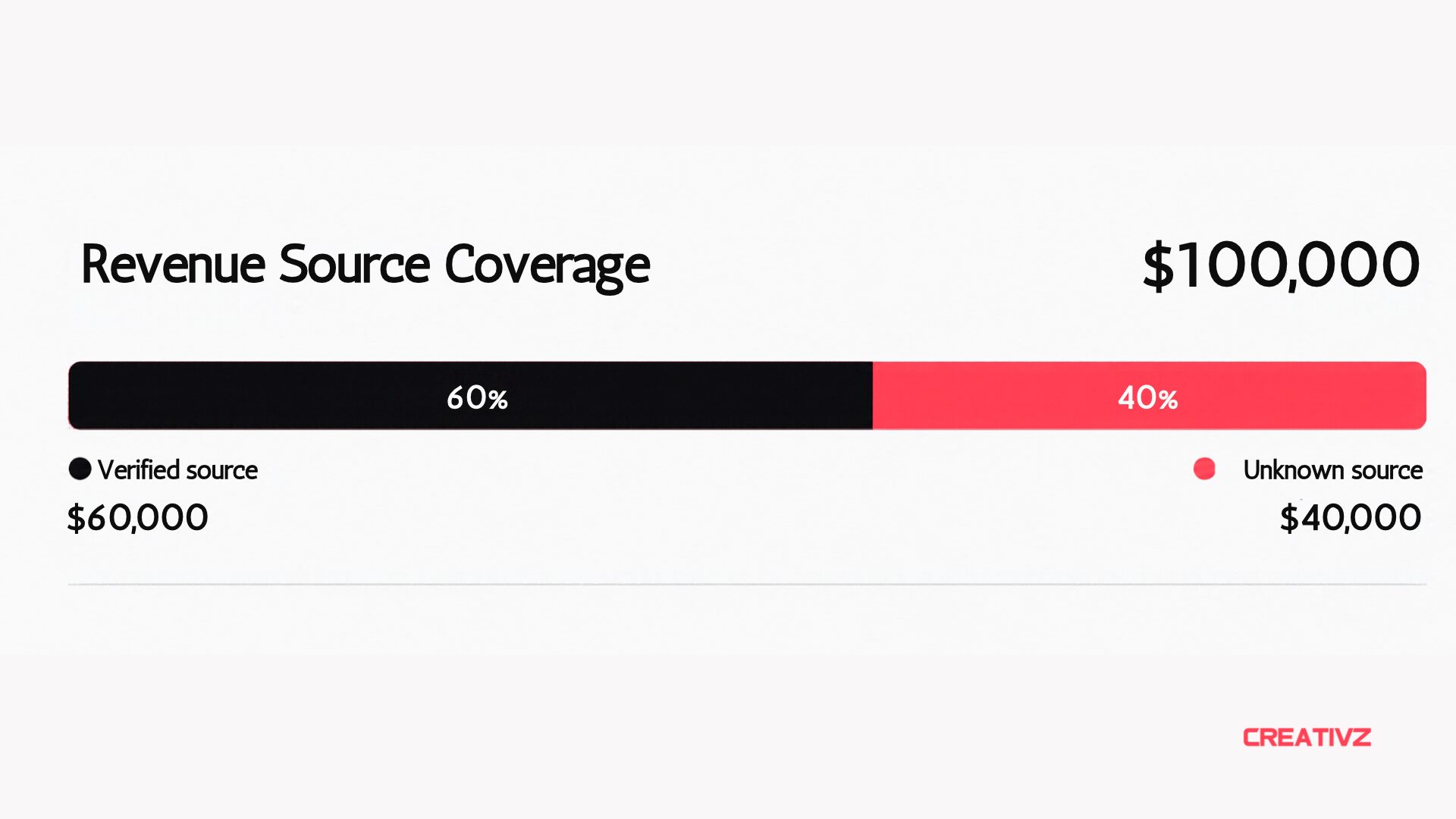
Look at what the unknown deals have in common. If most came through one booking form, test whether that form saves campaign data. If the source is on the contact but missing from the deal report, check how contacts and opportunities are linked. If the original source keeps changing, check which form, integration, or workflow can update that field.
What can you decide with the result?
Go back to the LinkedIn question. If you can verify several LinkedIn deals under the same attribution rule, you can review their deal value, sales cycle, and campaign cost before deciding what to test next. If a large share of closed-won value is still Unknown, check whether those gaps cluster around a particular channel or lead path before comparing campaigns.
Attribution tells you which recorded interactions received credit under your rule. To estimate how many additional deals LinkedIn ads caused, you’d need a separate test that compares outcomes with and without the ads.
Want to go deeper?
- Use Marketing Attribution for Startups to decide how your team should assign credit across a longer buying journey.
- Read Why Your CRM Reporting System Does Not Match Reality if the same deal tells a different story in sales and marketing reports.
Final Thought: Start with the deal you’ll discuss on Monday
Pick the deal someone is most likely to bring up in your next budget meeting. Open the opportunity, find the source record, and see whether you can explain the connection in one sentence. If you can’t, write down where the trail ends. That tells you what to investigate first.
If the same gap keeps showing up across your deals, bring one closed-won deal to Creativz. We can review how the inquiry reached your CRM and help you decide what to fix first.