
2026 Marketing Predictions: How Websites and Landing Pages Will Drive Revenue
The marketing playbook you used in 2024 won’t work in 2026.
Search behavior is shifting to AI-powered answers. Attention spans are measured in seconds. Conversion costs are climbing while trust is dropping. The question right now isn’t whether to adapt; it’s how fast you can move.
This blog breaks down seven predictions for 2026, each backed by data and tied to actionable strategy.
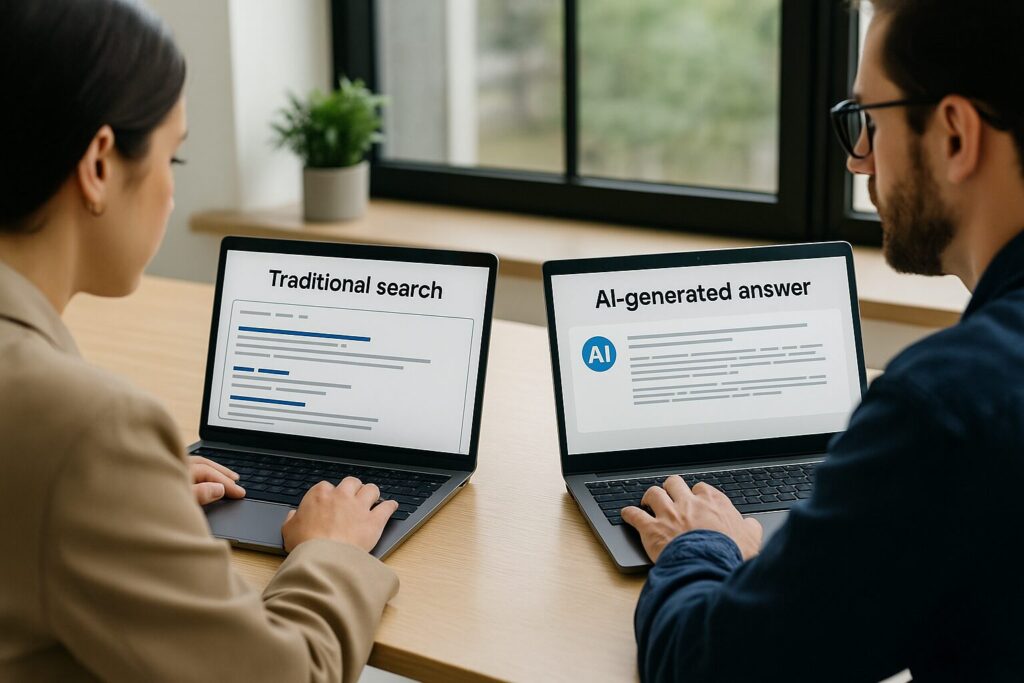
1. AI Search Replaces Traditional SEO
Gartner predicts a 25% drop in traditional search volume by 2026. The reason is that people are getting answers straight from AI instead of going to websites.
This change opens up the $80 billion SEO business. When ChatGPT or Gemini answers a question without showing links, being on page one doesn’t matter as much. The new game is called Generative Engine Optimization (GEO), and it lets you make your content the source that AI tools use.
By the middle of 2024, 79% of people were already using AI-enhanced search, and 70% of them trusted the results. Now, for your business to be visible, AI must possess the ability to read, understand, and cite your content.
What to do:
- Write for meaning, not keywords.
- Structure content with clear headings, short paragraphs, and conversational Q&As.
- Add schema markup.
- Cite credible sources.
The goal is to make it easy for AI to get your information and use it.
We explain the technical steps in our Generative Engine Optimization guide to ensure AI search tools cite your content.
2. Personalization Becomes Table Stakes
71% of customers want experiences that are tailored to them. 76% of people get upset when websites don’t provide them useful information.
In 2026, generic websites will lose. People want your site to know who they are, what they need, where they came from, and what problem they’re trying to solve. Even simple personalization, like showing different headlines based on where people came from, can greatly increase conversions.
The data is clear: 80% of customers are more likely to buy from brands that personalize, and personalized experiences lead to 38% more spending.
What to do:
- Start with simple segmentation. New visitor vs. returning. High-intent page (pricing) vs. blog reader.
- Create customer profiles and tailor messaging for each.
- Use your CRM data. Show relevant case studies based on industry.
- Feature different CTAs based on user behavior.
Personalization is a trust signal. It shows you’re listening. Our micro-conversions strategy explains how tailoring experiences creates engagement momentum that drives sales.
3. Trust Determines Conversion More Than Design
A lot of people say that it’s getting harder to trust what they read online. Only 27% of people are very sure that companies will keep their data safe.
A website that looks good but feels sketchy won’t help. Trust is now the thing that stops people from converting.
In 2026, successful sites will prioritize authenticity over aesthetics. Real customer testimonials with names and faces. Behind-the-scenes content, team photos, clear data policies and consistent messaging that matches reality.
95% of consumers read reviews before purchase. Your trust signals—reviews, certifications, social proof—need to be visible immediately, not buried three scrolls down.
What to do:
- Audit your trust elements.
- Highlight 5-star reviews.
- Add an FAQ addressing common concerns (data safety, refund policy).
- Embed recent customer mentions.
Keep your content up to date; outdated information indicates neglect.
4. The 8-Second Attention Window
The average attention span is 8 seconds. On mobile, users take 1.7 seconds to decide whether to stay or leave.
You have less than a heartbeat to get someone to stay on your homepage. If your value proposition isn’t clear right away, people will leave.
People have learned to make quick decisions because of how they scroll and how much information they get. This indicates that clarity always wins, and clutter confuses.
What to do:
- Apply the blink test to your above-the-fold section.
- Can someone instantly understand what you offer, who it’s for, and why it matters?
- Simplify jargon.
- Use headlines that speak to outcomes.
- Break content into scannable sections with clear headers.
Our 7 Elements of a High-Converting Landing Page shows how to structure pages for maximum clarity in minimal time.
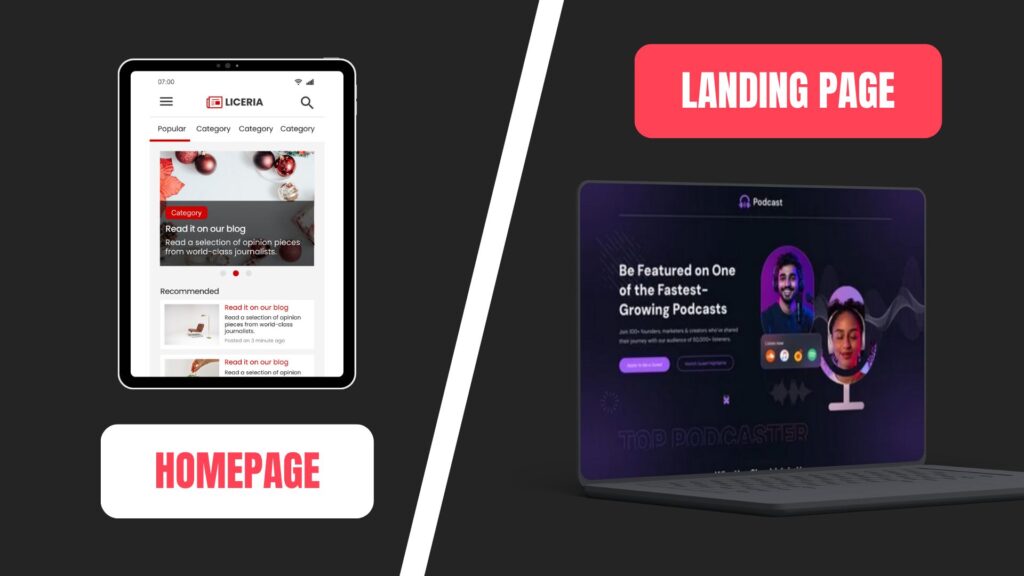
5. Landing Pages Outperform Homepages by 12X
Companies that have 40 or more landing pages get 12 times as many leads as those that only have a few. The reason is that landing pages are more relevant to specific campaigns.
Homepages have many different uses. A landing page has one job and one call to action. Tailoring the message to the audience and the source of traffic significantly increases conversion rates.
In 2026, expect every serious company to maintain a portfolio of landing pages tailored to different segments. Someone clicking an ad about “affordable services” shouldn’t land on a generic homepage that also discusses enterprise solutions. The disconnect kills conversion.
What to do:
- Build campaign-specific landing pages.
- Match ad language to page headlines (message match).
- Strip away navigation and distractions.
- Focus on one offer, one audience, and one action.
- Use A/B testing to optimize performance.
Landing pages level the playing field. A small business with a focused landing page can outconvert a large competitor with an unfocused homepage.
6. Micro-Conversions Predict Revenue Better Than Traffic
Ninety-eight percent (98%) of users who visit your website won’t convert on their first visit. Most of them need to warm up by reading content, watching a video or downloading a resource before they even buy.
Each small action is a sign of growing interest, or a micro-conversion. Interactive content gets 52% more people to interact with it than static content, and it can even double conversion rates.
In 2026, successful websites will be built as engagement funnels. Small wins (clicking “Read testimonials,” using a calculator, taking a quiz) prime visitors for the big conversion.
What to do:
- Map your customer journey. Identify the first small action a new visitor could take that provides value.
- Add interactive elements (quizzes, calculators, assessments).
- Track these micro-conversions as leading indicators of sales.
Each micro-yes builds psychological momentum toward the final purchase.
7. Conversion Optimization Beats Traffic Growth
Customer acquisition costs have soared 222% over eight years. Brands now lose an average of $29 on each new customer they get right away.
If you want more traffic but don’t fix conversion, it’s like pouring water into a bucket that leaks. In 2026, smart businesses will work on getting more money from the traffic they already have.
If you raise your conversion rate from 2% to 4%, you double your sales without needing more visitors. This is where leverage lives for small businesses with tight ad budgets.
What to do:
- Conduct a conversion audit. Identify where people drop off and why.
- Fix friction points (too many form fields, unclear CTAs, missing trust signals).
- Test button copy.
- Add guarantees.
- Make small tweaks that lift conversions appreciably.
Our 10 Growth Hacks guide provides quick-win tactics that can double conversion rates without increasing traffic.
Final Thoughts
2026 will reward businesses that adapt fast. AI search changes visibility rules. Shrinking attention spans demand clarity. Rising acquisition costs make conversion optimization critical.
The companies that win will be those that treat their websites as decision tools, not digital brochures. They’ll personalize experiences, build trust immediately, and guide visitors through micro-conversions toward purchase.
Your move: audit your website against these predictions. Ask where you’re vulnerable and where you can gain advantage.
Ready to prepare your site for 2026?
Schedule your 15-minute expert audit with us.
The businesses that move now will own their market in 2026.
