
If you are losing B2B clients in the first 90 days, the cause is rarely weak relationships. In most cases, the real issue is unclear operations that create confusion, delays, and missed expectations early in the client experience.
Research shows that roughly 43 percent of B2B churn occurs within the first 90 days. For your client, this window is when they test whether your team can deliver on what you promised. Their judgment rarely comes from one major failure. Instead, it forms through many small moments: slow replies, missed milestones, unclear handoffs, and follow-ups that arrive too late to help.
By the time a client tells you they want to leave, the decision has built for weeks. At that point, even a strong account manager has little room to repair the damage because the client has already lost confidence in the process.
Many founders try to solve this by pouring more energy into the relationship. They communicate more often, make themselves more available, and work harder to build rapport. These actions can help. They still miss the root cause when the client experience itself feels inconsistent.
What usually breaks first is the system behind the relationship. During the first 90 days, retention problems often start when the sales-to-delivery handoff lacks structure. Onboarding may depend on scattered ad hoc emails. The CRM may fail to track client health signals. No one may define what success should look like by day 30, day 60, and day 90.
These are not minor communication issues or isolated mistakes. They are operational gaps that make it harder for clients to trust your process and easier for dissatisfaction to grow quietly.
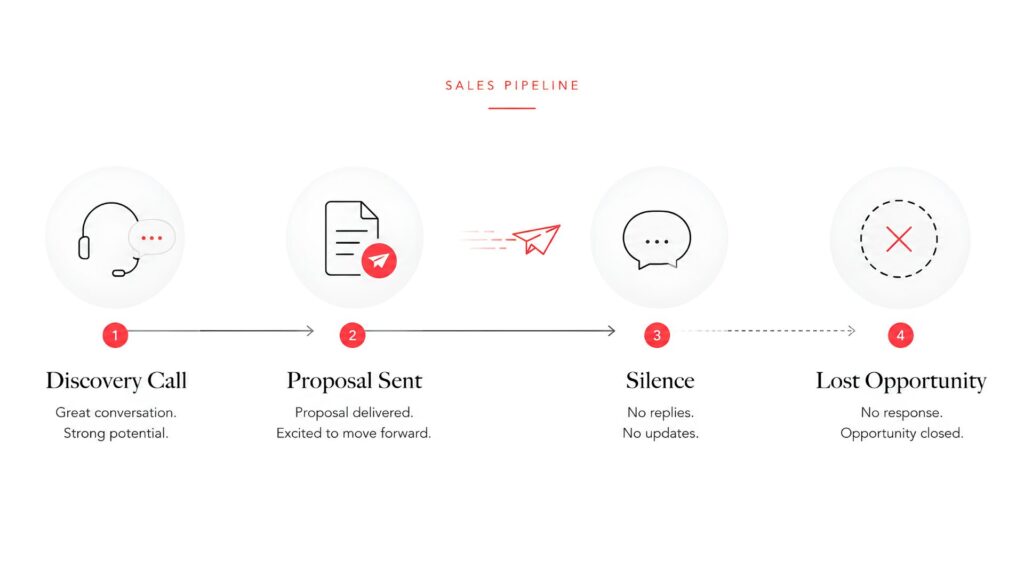
Why the First 90 Days Is Where B2B Client Retention Is Won or Lost
The data on this is consistent. It points to four operational gaps that drive early churn across industries.
- If you lose clients in the first 90 days, weak onboarding is often a core cause. OnboardMap reports that 43 percent of churn happens during this period. They also link 23 percent of churn directly to poor onboarding.
- Speed shapes retention as well. Clients who complete intake within 48 hours retain at 85 percent over 12 months. Retention drops below 50 percent when intake stretches beyond 10 days.
- Client perception matters just as much as process. Vonsel reports that 68 percent of B2B clients leave because they feel neglected. They do not leave first because of price or product.
- Expectation-setting is another major risk point. Satrix Solutions names misaligned expectations and confusing implementation as the top drivers of B2B churn.
- The financial impact is hard to ignore. Bain & Company reports that winning a new client costs 5 to 25 times more than retaining one. Improving retention by just 5 percent can lift profits by 25 to 95 percent.
For your business, each client lost in the first 90 days costs more than one contract. You lose the money you spent to acquire that client. You also lose the revenue they would have generated, the referrals they might have sent, and the case study they could have become.
Why this matters:
Early churn is the most expensive churn. It wipes out acquisition spend before you have a real chance to earn a return. Because it often happens quietly, many businesses fail to measure it until the damage is done.
The 4 Operational Failures That Drive Early Churn
These four failures show up in most B2B businesses that struggle to retain clients in the first few months. They usually come from process gaps, not personality issues.

Failure 1: No Structured Sales-to-Delivery Handoff
Your client’s first real experience after signing is the move from sales to the delivery team. In many businesses, this is also one of the weakest parts of the customer journey.
Once the deal closes, the delivery team often receives only a short Slack message or a forwarded email thread. Important context gets lost. Your team may not know why the client decided to buy or what concerns they raised before signing. They may not know what you promised in the final sales call or what they should handle carefully in the first week.
B2B Growth Hub clearly highlights this problem. A proper handover brief should include core facts, relationship context, client goals, sensitivities, and next steps. It should also reach the delivery team within 24 hours.
When that transfer does not happen, your client notices the disconnect right away. If they must repeat information, the transition feels disjointed. The trust built during the sales process begins to weaken.
The operational gap:
Most businesses still handle handoffs without a standard template, a clear SLA, or a joint introduction between sales and delivery. This gap leaves the delivery team rebuilding context from scratch each time.
Failure 2: No Automated Onboarding Sequence
If your onboarding relies on one-off emails and reactive meetings, clients notice the inconsistency right away. In many B2B businesses, the account manager checks in when they remember. The welcome email goes out whenever someone has time. The first steps after closing lack any clear structure.
That inconsistency rarely comes from a lack of effort. It usually stems from the absence of a defined process. In the first two weeks of a client relationship, that gap often reads as disorganization. Once a client starts questioning whether your team is aligned, confidence can drop very quickly.
The data supports this pattern. Digital Applied reports that clients who complete a structured onboarding process are 3.4 times more likely to stay for more than 12 months. Welcome sequences that reference a client’s specific goals can reduce early churn by up to 25 percent. The same research shows that structured onboarding can cut time-to-value by 40 percent and lower onboarding labor by 50 to 70 percent.
For your business, effective onboarding automation does more than improve retention. It also makes your team more efficient by reducing time spent chasing documents, sending manual reminders, and managing avoidable delays. With those tasks automated, your account manager can spend more time on strategic conversations that strengthen the client relationship.
The operational gap is clear:
Most businesses still lack a CRM-triggered welcome sequence, automated document collection, and a milestone-based email cadence. Many also lack a client portal and clear status tracking. As a result, onboarding depends on memory, manual follow-up, and goodwill, which makes a consistent client experience much harder to deliver.
Failure 3: No Milestone Check-Ins or Health Metrics
If a client becomes dissatisfied early, they rarely say it right away. You notice a change in behavior first. Replies slow down. Engagement with the work starts to drop. Questions surface that a confident, well-supported client would not normally need to ask.
By the time a client tells you they feel unhappy, the decision to leave is already moving. At that stage, your team is no longer preventing dissatisfaction. It is trying to recover from it after trust has weakened.
Directive Consulting’s research shows why this window matters. When clients do not experience a meaningful win within 30 to 90 days, they begin moving mentally toward the exit. That pattern leaves your team with a narrow chance to step in. Milestone-based check-in triggers, rather than random calendar reminders, can increase client engagement by 40 percent. CSAT surveys at day 30 and day 90 also help flag clients who are four times more likely to churn. Those signals give your team a chance to intervene before the account is too far gone.
The operational gap is clear:
Most businesses never define what the first 90 days should look like. They also fail to automate follow-up when milestones are reached or missed. Many do not send CSAT surveys at the points where client sentiment is most useful. In many cases, there is no clear escalation path when a client gives a low score, so warning signs arrive too late or receive no action at all.
Failure 4: No Early-Warning System in the CRM
If a client is becoming a churn risk, the warning signs usually appear in your systems before they appear in a conversation. You can often spot them in CRM activity, email threads, and meeting records, but only if your business is set up to track those signals consistently.
Research from Email Meter found that 85 percent of churned accounts showed a 40 percent drop in email engagement during the 90 days before termination. Common warning signs included lower email volume, slower response times from the team, and escalation language appearing more often in client messages.
Response speed also has a direct effect on retention. The same research found that customers who wait more than 10 minutes for a first response are 50 percent more likely to churn within six months. By comparison, the average company takes 12 hours to reply to a client email, which shows how far many businesses are from meeting client expectations.
For your business, this means early churn is often visible long before a cancellation request arrives. When response times slip, engagement drops, or meeting attendance becomes inconsistent, your team has a chance to intervene before the account is lost.
The operational gap is clear:
Most businesses lack a CRM dashboard that tracks email volume, response times, and meeting attendance by account. They also lack SLA targets by client tier, alerts for engagement drops, and a weekly review process for spotting early-warning signals before they turn into churn.
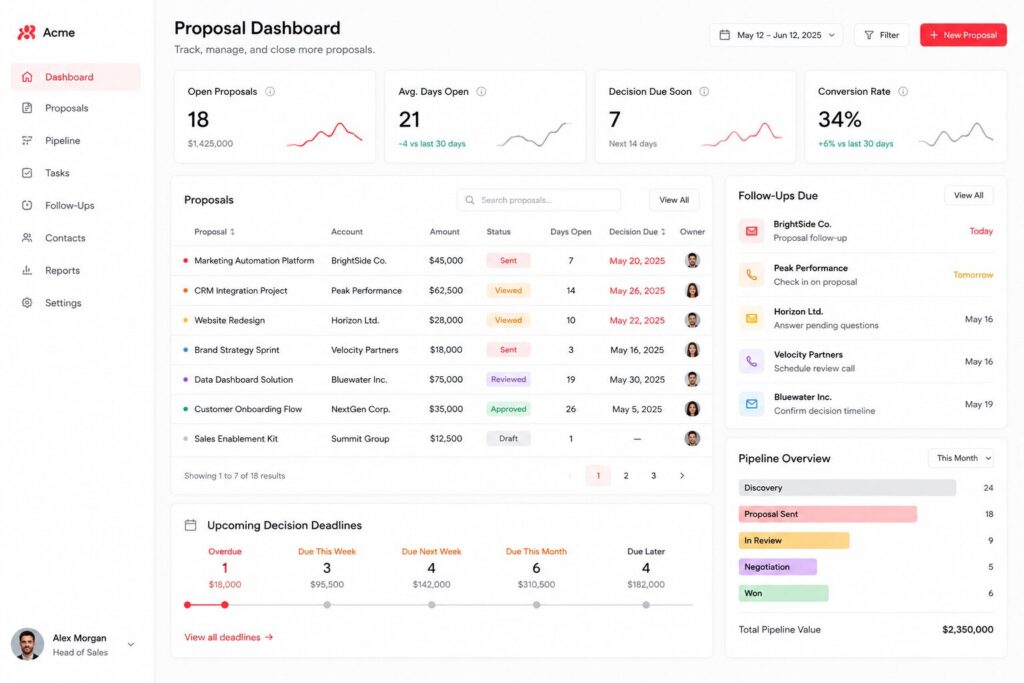
The Retention System That Fixes Each Failure
You do not need a new hire or a complete personality shift to improve B2B client retention. What you need is a set of operational components that directly fix the failures already described.
Component 1: The Structured Handoff
If you want clients to feel confident after signing, the handoff from sales to delivery needs to be structured, consistent, and immediate. A non-negotiable handoff template should be completed before the deal is marked closed and capture the information your delivery team needs to start well. That includes why the client chose your company, what was promised in the final sales conversation, what concerns or anxieties the client raised, who the key stakeholders are, how they prefer to communicate, and what success should look like in the first 30 days.
Once that handoff is complete, your process should trigger a joint introduction email from both the sales rep and the delivery lead within 24 hours of closing. For the client, this creates continuity and makes the transition feel deliberate rather than abrupt. For your delivery team, it provides the context needed to begin with clarity instead of piecing details together after the fact.
What to build in the CRM:
A required handoff form tied to the deal stage, a 24-hour SLA alert that triggers if the handoff is not completed on time, and an automated joint introduction email template that pulls directly from the deal record.
Component 2: The Automated Onboarding Sequence
If you want clients to feel confident immediately after signing, your onboarding sequence needs to begin fast and follow a clear structure. The first email should go out within two hours of the deal closing, not the next morning or later in the week. That message should be personalized, reflect the client’s stated goals, and clearly explain the next three steps so they know exactly what happens next.
From there, the CRM should manage the process automatically. Document collection reminders should be sent based on deadlines, kickoff call invitations should be scheduled at the right stage, progress confirmations should go out when milestones are completed, and the account manager should be alerted whenever a client does not respond within the defined timeframe.
This speed matters because early organization directly affects retention. According to OnboardMap, clients who complete intake within 48 hours retain at an 85 percent rate over 12 months. That kind of retention does not happen by chance. It happens when the first 48 hours feel organized, responsive, and tailored to the client’s priorities.
What to build in the CRM:
A deal-close trigger that launches the welcome email sequence, automated task creation for document collection with deadline alerts, a client portal link included in the first email, and status tracking that shows incomplete onboarding tasks to the account manager every day.
Component 3: The 90-Day Milestone Map
To retain clients through the first 90 days, you need a clear definition of progress at each stage. Divide the journey into three phases: activation (days 1 to 14), implementation (days 15 to 60), and optimization (days 61 to 90). Each phase should include defined deliverables, expected outcomes, and trigger points for client communication.
Milestone-based triggers work better than calendar-based reminders because they reflect real progress. A completed milestone gives your team a chance to reinforce value, while a missed milestone acts as an early warning signal that intervention may be needed.
CSAT surveys should go out at day 30 and day 90. According to Digital Applied, clients who score below 7 churn at four times the rate of satisfied clients, so a low score should trigger immediate escalation to a senior team member rather than a templated response.
What to build in the CRM:
A 90-day milestone pipeline with phase-based stages, automated CSAT triggers at day 30 and day 90, an escalation workflow that routes low-score responses to a senior owner within 24 hours, and a milestone completion dashboard visible to the full account team.
Component 4: The Early-Warning Dashboard
To catch churn risk before a client raises concerns, you need a CRM view that flags health signals weekly. Track response times by account and client tier, monitor meeting attendance, and follow document completion during onboarding. When response times slip beyond your SLA or engagement drops, your team should be able to see it immediately.
Tiered response-time targets make the dashboard more useful. Set clear standards such as two hours for enterprise clients, four hours for mid-market accounts, and eight hours for small business clients. According to Email Meter, exceeding those thresholds correlates with higher churn, so the dashboard can help you spot risk before it leads to a cancellation.
A short weekly review keeps those signals actionable. In five minutes, your account team can identify patterns, spot accounts showing multiple warning signs, and decide where intervention is needed before small issues turn into retention problems.
What to build in the CRM:
A client health report filtered by response time, email volume, and milestone status; SLA alert automations by client tier; a weekly review task for the account lead every Monday morning; and a flag system for accounts showing three or more warning signals at the same time.
What This Looks Like When It Works
One B2B service firm was losing three to four clients per quarter within the first 90 days. Each lost account was worth about $18,000 in annual recurring revenue, yet the team assumed the problem was client fit rather than process.
When Creativz audited the onboarding experience, four operational gaps stood out: there was no structured handoff template, no CRM-triggered welcome sequence, no milestone map for the first 90 days, and no clear visibility into client engagement after the kickoff call.
The fixes took three weeks to implement. A handoff form was added to the deal stage; a six-email welcome sequence was automatically triggered when a deal closed; a 90-day milestone pipeline replaced the manual task list; and a weekly health dashboard began tracking response times and engagement by account.
In the next quarter, early churn dropped to zero. The team did not change who they hired or suddenly become better at managing relationships. They improved retention by strengthening the systems that supported those relationships.

The takeaway for your business is straightforward: B2B client retention improves when your processes make the client experience consistent, visible, and easy to manage at scale.
Want to Go Deeper?
If your business is losing clients in the first 90 days, these posts cover the infrastructure layer in more detail.
- How to Build a CRM Pipeline That Actually Works — the foundation that makes onboarding automation and health monitoring possible.
- Conversion Rate Optimization for Manufacturing and Construction— the same revenue infrastructure thinking applied to the pre-sale phase.
- 9 Reasons Your Website Is Not Converting—for when the client acquisition side needs attention alongside the retention side.
Final Thought
Winning a client is expensive. Losing one in the first 90 days is more expensive still. Because you paid all the acquisition cost and none of the return.
Most founders know this intellectually. But most businesses are still running client retention on memory, personality, and good intentions. Those things scale poorly. A structured handoff, an automated onboarding sequence, a milestone map, and an early-warning dashboard scale well.
B2B client retention is a systems problem. That means it has a systems solution. And it is not as complicated to build as most teams assume.
Find Out Where Your Client Retention System Has Gaps
If you want to see where your onboarding, CRM, and retention process may be breaking down, the Revenue System Scorecard gives you a clear starting point in about 10 minutes. Most founders who take it uncover at least two of the four operational gaps covered in this blog.
If you want a more detailed review, the Free Digital Growth Audit maps your full client lifecycle from first contact through the first 90 days and helps identify the fix that is most likely to improve retention fastest. You will not get a generic sales pitch — just a clear view of what is working, what is not, and where to focus next.

Creativz.io
Creativz.io is a digital growth consulting firm that builds revenue infrastructure for B2B founders scaling from $500K to $10M ARR. The team architects conversion systems, CRM pipelines, lead-nurture automation, and analytics infrastructure that turn website traffic into predictable revenue. Creativz has worked across construction, SaaS, fintech, B2B services, and logistics, with a focus on systems that scale without scaling headcount.
