
There is a reason people trust their local barber more than a celebrity ad.
The barber knows their customers. Talks to them every week. Understands exactly what they need. So when they recommend something, people act.
Now compare that to a celebrity with 5 million followers. Massive reach. No relationship.
That gap between relationship and reach is not just a feeling. Research backs it up.
Recent global research from Edelman’s Brand Trust Report shows that “I trust it” is rated as a purchase deal-breaker alongside “good value” and “best quality,” all at 88% in global results. Trust is not a soft metric. It is a conversion variable.
So if your funnel lacks a trust system, more traffic will not fix the problem. It just feeds the leak.
This blog breaks down the trust gap inside most micro-influencer marketing strategies, the Trust Stack framework that fixes it, and how to measure whether your influence is actually generating pipeline.

Why Micro-Influencer Marketing Does Not Always Win and When It Does
Micro-influencers win for one reason: specificity.
They speak to one audience, one problem, one context. That creates higher engagement, stronger credibility, and better conversion than mass-reach campaigns.
But here is the part most brands get wrong.
Choosing micro over celebrity is not always the right call. According to the Captiv8 2024 Organic Benchmark Report (analyzing 5,000+ organic creator posts and 14M+ engagements):
- On Instagram, smaller tiers produce significantly higher average organic engagement—nano creators average 6.23% versus 2.80% for the largest tier.
- On TikTok, the pattern reverses. Top-tier creators outperform smaller tiers, with All Star averaging 4.95% versus Micro at 0.85%.
The real strategy is not “always pick micro.” It is this:
Pick the tier that matches the job. Micro and nano for trust-density. Top-tier for broadcast reach. Your system converts either way.
A micro-influencer marketing strategy only works when tier selection aligns with the funnel stage, not just follower count.
The Trust Gap Inside Every Micro-Influencer Marketing Strategy Nobody Talks About
People use influencer marketing. They do not fully trust it.
The BBB/NAD Influencer Trust Index 2025 surveyed over 3,700 U.S. consumers and found that only 5% completely trust influencer advertising. A significant share actively distrusts it. For context, trust in general advertising ranges from 74% to 87%, while trust in influencer advertising lags.
That means you cannot treat influencer posts as proof. They are a doorway into a system that must build proof across multiple touchpoints.
The same research reveals what actually drives trust and what destroys it.
What builds it:
- Honest reviews, even when they are not fully positive (cited by 79% of respondents)
- Transparent disclosure of brand relationships (71%)
And what breaks it:
- Not being genuine or honest (80%)
- Failing to disclose the relationship (64%)
Micro-influencers are not trusted because they are small. They are trusted when they are honest and context-specific. That distinction matters for how you build your strategy.
Why Most Micro-Influencer Marketing Strategies Fail Without a Trust Infrastructure
Most founders misdiagnose this completely.
They think they need better influencers or more reach. The actual problem is that there is no trust system inside the funnel.
Here is what usually happens:
- Traffic arrives from an influencer post
- The page explains features
- An offer is presented
But there is no proof. No validation. No reinforcement that builds belief across the session.
So visitors hesitate. And leave.
A 2025 peer-reviewed study surveying 232 social media users confirmed this pattern. Influencers can raise purchase intention, but that intention translates weakly into actual purchase behavior. The gap between intent and action exists because the funnel lacks the architecture to convert belief into a decision.
This is not a traffic problem. It is a trust infrastructure problem.
The Trust Stack: The Framework Every Micro-Influencer Marketing Strategy Needs to Convert
Most funnels do not fail because the offer is bad. They fail because the buyer never gets enough proof to feel safe.
A Trust Stack is a sequence of signals that answer the buyer’s real questions before they are asked:
- Is this true?
- Will it work for someone like me?
- Is this honest?
- Is this worth the risk?
A high-performing Trust Stack combines five layers:
- Borrowed trust: credible creators who speak to your audience’s exact context
- Peer trust: real customer reviews with specific outcomes, not polished quotes
- Behavioral proof: trackable outcomes tied to your offer, not engagement metrics
- Integrity proof: clear disclosures and zero fake social proof
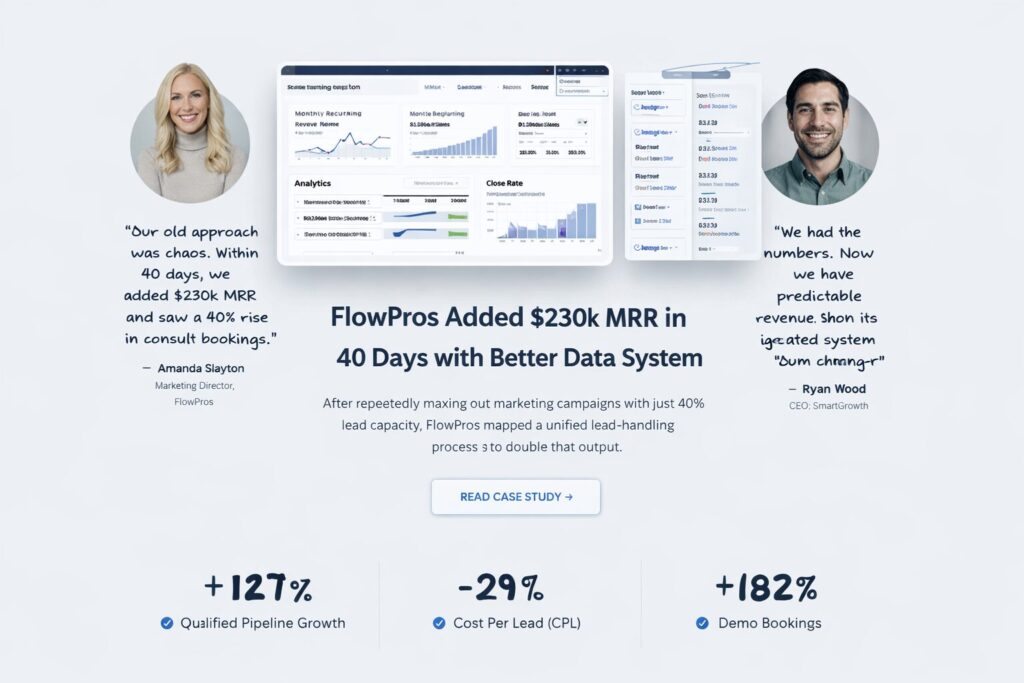
- Outcome proof: case studies that mirror the buyer’s exact situation
If you only have layer one, you do not have a system. You have a lottery ticket.
One layer most brands skip entirely is compliance. In 2026 that is no longer optional.
Compliance Is Part of the Trust Stack, Not a Footnote
The FTC Endorsement Guides define clear and conspicuous disclosures as those that are easy to understand and difficult to miss. In interactive media, they must be unavoidable. Tags in social media posts count as potential endorsements.
In 2024, the FTC finalized a rule banning fake reviews and fake social indicators for commercial purposes. Buying fake followers to appear credible is now a regulated activity.
Disclosure is not what breaks trust. Getting caught hiding it is.
If your funnel uses inflated follower counts, incentivized reviews without disclosure, or polished quotes stripped of context, you are not building trust. You are building a liability.

How a Micro-Influencer Marketing Strategy Fits Into a Revenue-Generating Funnel
Micro-influencers are not the strategy. They are one component inside the system.
Most brands deploy influencers only at the top of the funnel and stop. That is why the ROI disappears. Each tier has a specific job at a specific stage.
- Top of funnel: Credibility entry point. The influencer introduces your brand to a built-in audience of trust.
- Mid funnel: Validation layer. Creator content reinforces that your solution works for someone like the buyer.
- Bottom of funnel: Decision support. Testimonials and case studies reduce hesitation at the moment of final conversion.
When all three stages work together, the results are measurable. A Kantar analysis of one coordinated campaign using 70 plus creators reported plus 15% purchase intent and plus 27% brand recall. The difference was not the creator count. It was the strategic integration across funnel stages.
This is also where your website infrastructure becomes as important as your influencer selection. If the landing page the influencer sends traffic to has no proof architecture, the campaign cannot convert regardless of how strong the creator is.
If your landing page is the weak link, start here: Why Your Landing Page Is Not Converting.
How a Micro-Influencer Marketing Strategy Generates Qualified Leads From Trust to Pipeline
Exposure without capture is wasted spend.
Most brands run influencer campaigns and measure success by reach and engagement. Neither of those numbers tells you if the campaign created a pipeline. To turn influence into revenue, you need to connect creator content to your data infrastructure.
That means:
- Directing traffic to controlled landing pages, not your homepage
- Capturing first-party data: emails, preferences, and intent signals
- Using UTM links and offer codes per creator to track real attribution
- Segmenting leads by source and triggering relevant nurture sequences
When those four things are in place, the flow looks like this:
Influence → Data Capture → Nurture → Conversion
Now you are not just buying attention. You are building a pipeline.
The measurement challenge is real. Kantar’s research notes that 61% of marketers plan to increase creator investment, yet most still struggle to connect creator activity to pipeline contribution. The brands that solve this first gain a durable competitive advantage.
Without this flow, you get impressions. Not revenue.
For a deeper breakdown of how to structure your data capture infrastructure, read: Email Marketing in 2026: Why Full-Funnel Automation Beats Random Emails.
What Proof Before Pitch Looks Like Inside a Micro-Influencer Marketing Strategy
A Trust Stack only works if the proof appears before the pitch. Not on a testimonials page buried below the fold. Not in a follow-up email three days later. At every touchpoint, before the buyer is asked to act.
Here is what that looks like inside a high-performing funnel:
- A creator story that frames the problem in the buyer’s exact language. This is the entry point. The buyer sees themselves in the content before they ever reach your page.
- A landing page that leads with outcomes. Numbers, screenshots, and before and after results above the fold where they actually influence the decision.
- Reviews that include context. Not polished quotes. Who it is for, what changed, and what did not. Honest reviews with specific outcomes build more credibility than five-star praise with no detail.
- A case study that mirrors the buyer’s situation. Not a generic success story. A specific transformation that matches the buyer’s industry, company size, or problem.
- A disclosure that makes trust easier. Clear, early, and unavoidable. In 2026 hiding it is a liability. Showing it is a signal.
- A follow-up sequence that teaches and validates. Not a sequence that pitches. One that answers objections, delivers proof across sessions, and builds belief until the buyer is ready.
Trust is not built in one moment. It is built across touchpoints. Conversion happens when trust crosses a threshold.
If your funnel is leaking leads before they reach that threshold, the problem is usually structural. See: Why Your Business Does Not Have a Traffic Problem but a Conversion Problem.
Micro-Influencer Marketing Strategy Measurement: What to Track and Why Most Brands Get It Wrong
If you cannot measure it, it is not a system. It is content.
Most brands track reach, impressions, and engagement rate. Those numbers tell you how many people saw the campaign. None of them tells you if the campaign created a pipeline.
Here is what to track instead:
Lead capture rate per creator Which creators actually move people to act? This is the first filter that distinguishes between influence and impact.
Qualified lead rate Are these the right buyers or just clickers? High volume with low qualification indicates the creator audience does not align with your ICP.
Conversion rate by cohort Do creator-sourced leads convert at a different rate than paid traffic? If they do, that tells you which channel deserves more budget.
Revenue per creator or CAC by creator cohort The final number that tells you which creators belong in your system and which are burning budget.
Most brands never reach this level of measurement because the data infrastructure isn’t in place before the campaign launches. UTM links are missing. Landing pages are not tagged. CRM entries have no source field.
The measurement problem is almost always a setup problem, not an analytics problem. Build the tracking before you brief the creators, not after the campaign ends.
Micro-Influencer Marketing Strategy: Frequently Asked Questions
Are micro-influencers always better than celebrity influencers?
Not always. On Instagram, smaller tiers consistently produce higher organic engagement. On TikTok, top-tier creators can outperform micro-creators on the same metric. The right choice depends on the job: trust-density or broadcast reach. Pick the tier that matches the funnel stage and let your system do the converting.
What makes people actually trust influencer recommendations?
Two things: transparency and honest reviews. Consumers trust creators more when they are upfront about brand relationships and give real assessments, including negative ones. A creator who says “this works well but is not for everyone” builds more credibility than one who gives unqualified praise every time.
Does adding #ad or #sponsored hurt conversion?
No. Disclosures alone do not damage conversion. What damages conversion is getting caught hiding them. In 2026, clear and early disclosure is a trust signal. Buyers expect it. Brands that lead with it convert better than those that bury it.
How do you measure influencer marketing ROI beyond impressions?
Measure pipeline contribution. Track lead capture rate per creator, qualified lead rate, conversion rate by cohort, and revenue per creator. Impressions measure visibility. These four metrics measure whether influence is turning into revenue. The brands that track this way make better budget decisions every quarter.
How many influencers should a campaign include?
The question to ask is not how many but whether the creator tier and audience context match the funnel stage. One highly relevant nano-creator pointing to a strong landing page outperforms 20 mid-tier creators pointing to a homepage. Quality of match beats quantity of creators every time.
Want to Go Deeper?
These posts cover the infrastructure your micro-influencer strategy depends on:
Why Your Landing Page Is Not Converting (And Why Redesigns Don’t Fix It)
The post-click problem most brands ignore when running creator campaigns.
Email Marketing in 2026: Why Full-Funnel Automation Beats Random Emails
How to build the nurture infrastructure that converts influence into pipeline.
These posts cover the infrastructure your micro-influencer strategy depends on:
Why Your Landing Page Is Not Converting (And Why Redesigns Don’t Fix It)
The post-click problem most brands ignore when running creator campaigns.
Email Marketing in 2026: Why Full-Funnel Automation Beats Random Emails
How to build the nurture infrastructure that converts influence into pipeline.
Why Your Business Does Not Have a Traffic Problem but a Conversion Problem
The structural diagnosis most founders need before adding any new traffic channel.
Why Your Business Does Not Have a Traffic Problem but a Conversion Problem
The structural diagnosis most founders need before adding any new traffic channel.
Final Thought
Most funnels are built to attract attention. Very few are built to convert it.
That is why adding more traffic, more creators, and more spend often does not fix growth. It exposes the gaps.
The brands that win in 2026 are not the most visible. They are the most trusted.
And trust is built by design, not by luck.
If your funnel has influencer traffic but weak conversion, the problem is almost always the Trust Stack. A missing layer of proof, an unclear message, or a nurture sequence that never builds belief across sessions.
If you want to see exactly where your funnel is losing trust and revenue, book a Free Digital Growth Audit. We map your current funnel, identify every missing layer of the Trust Stack, and show you what needs to be fixed first.
